Falling asleep on your side doesn’t tell you what happened all night.
NightPosture records Back, Left, and Right patterns with a small chest-worn motion sensor, can optionally nudge after Back remains confirmed, and keeps detailed data local to your iPhone.
Private beta. Sensor list requires no payment and is not a purchase or reservation.
Why I built this
A clinical overnight sleep study told me what happened in a lab on one night. It could not tell me what happened at home, on the other nights — and I had no way to find out what position I was actually sleeping in.
For context, and with the caveat that this is a single night from a single person: that study reported an apnea-hypopnea index of 11.2 events per hour while on the back and 1.1 while off it. Only 38.2% of the night was spent off the back, so the second figure rests on a small number of events over a short stretch of sleep. One night from one person is an anecdote, not evidence — it is why I wanted better data, not proof of anything.
The study answered what happened in the lab. It raised a practical question for home: did “I fell asleep on my side” match the rest of the night? NightPosture was built to observe that position pattern—not to measure AHI.
See the anonymous study excerpts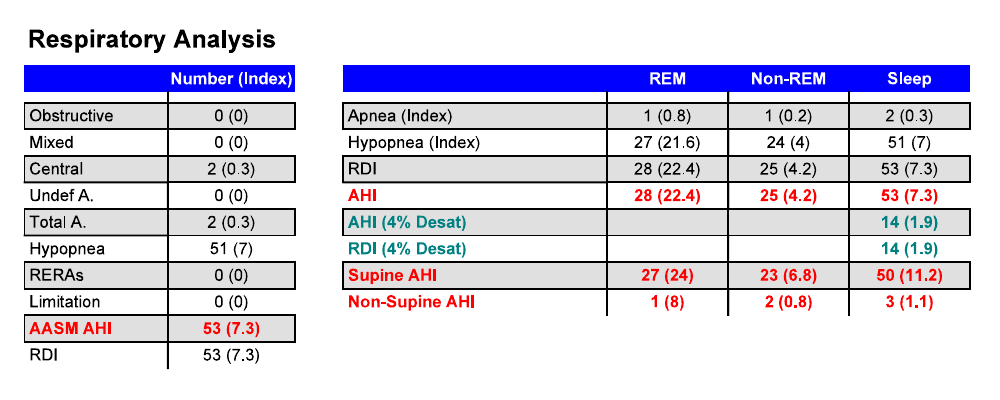
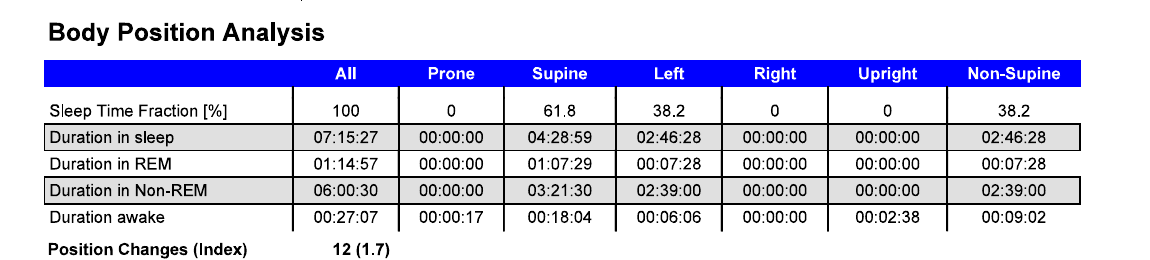
Personal result from a separate clinical sleep study. The study did not test NightPosture, and NightPosture did not collect or calculate the breathing, oxygen, or AHI data shown. This is not evidence that NightPosture changes AHI, improves sleep apnea, or will produce a similar result for anyone else. NightPosture is not affiliated with or endorsed by the clinic that performed the study.
A closer look
A focused setup at night and an honest, useful summary in the morning.
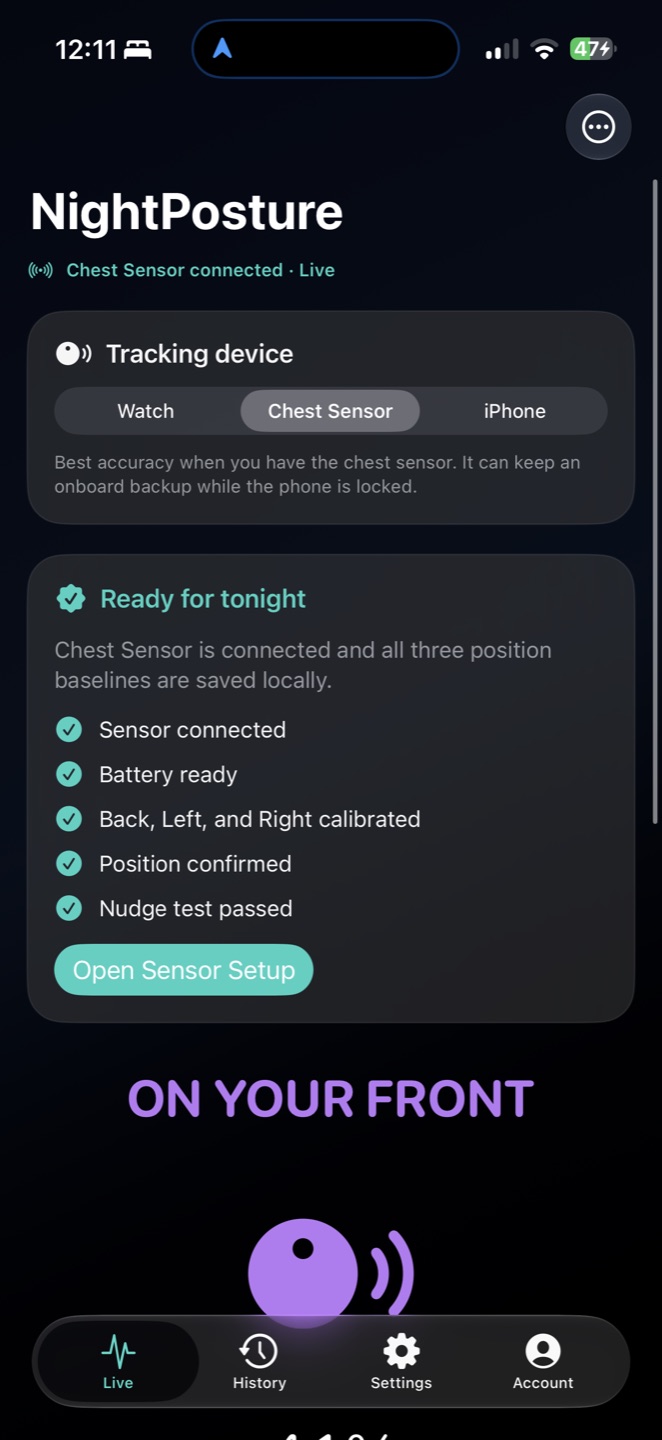
Ready for Tonight
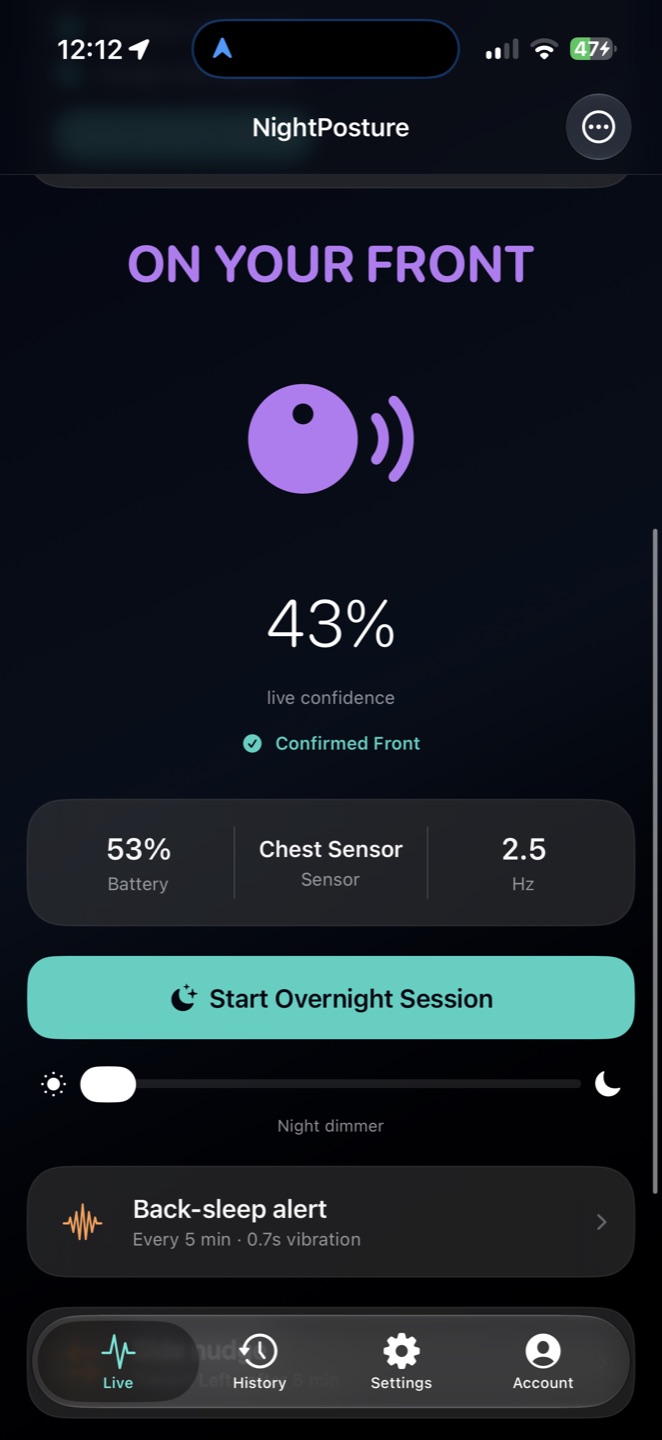
Live Tracking
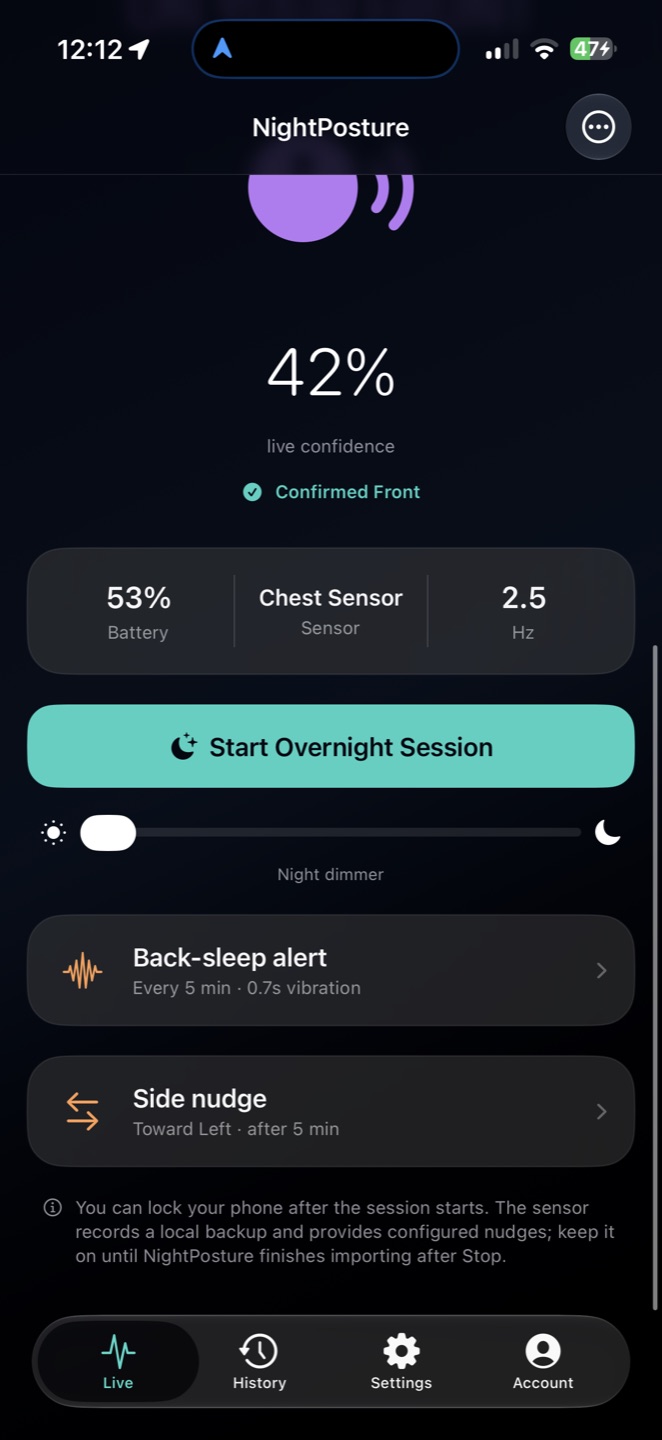
Nudge Settings
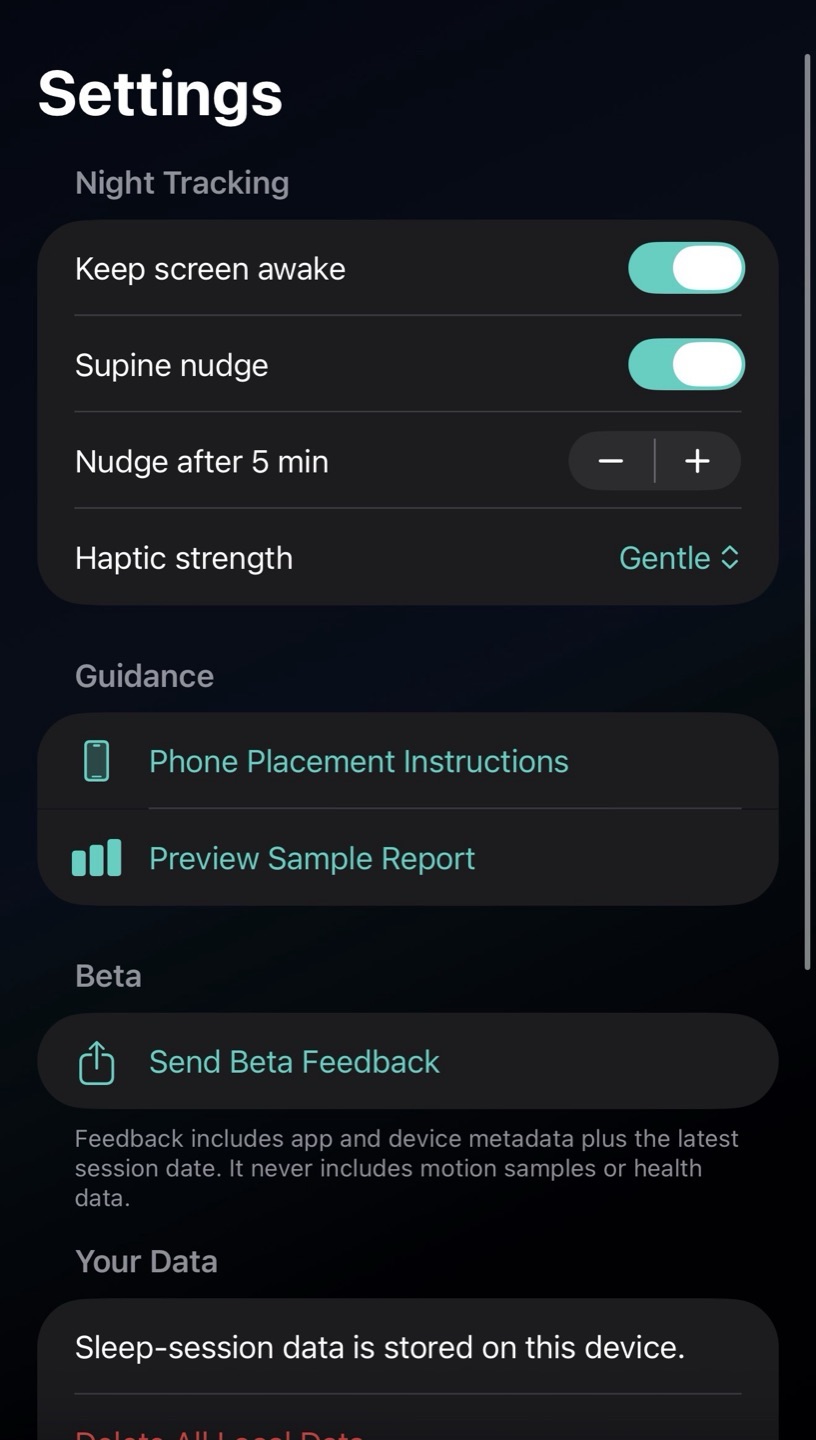
Settings
From timelines to personal context
NightPosture keeps the path from individual sessions to longer-term comparisons visible, so an interesting pattern never loses its context.
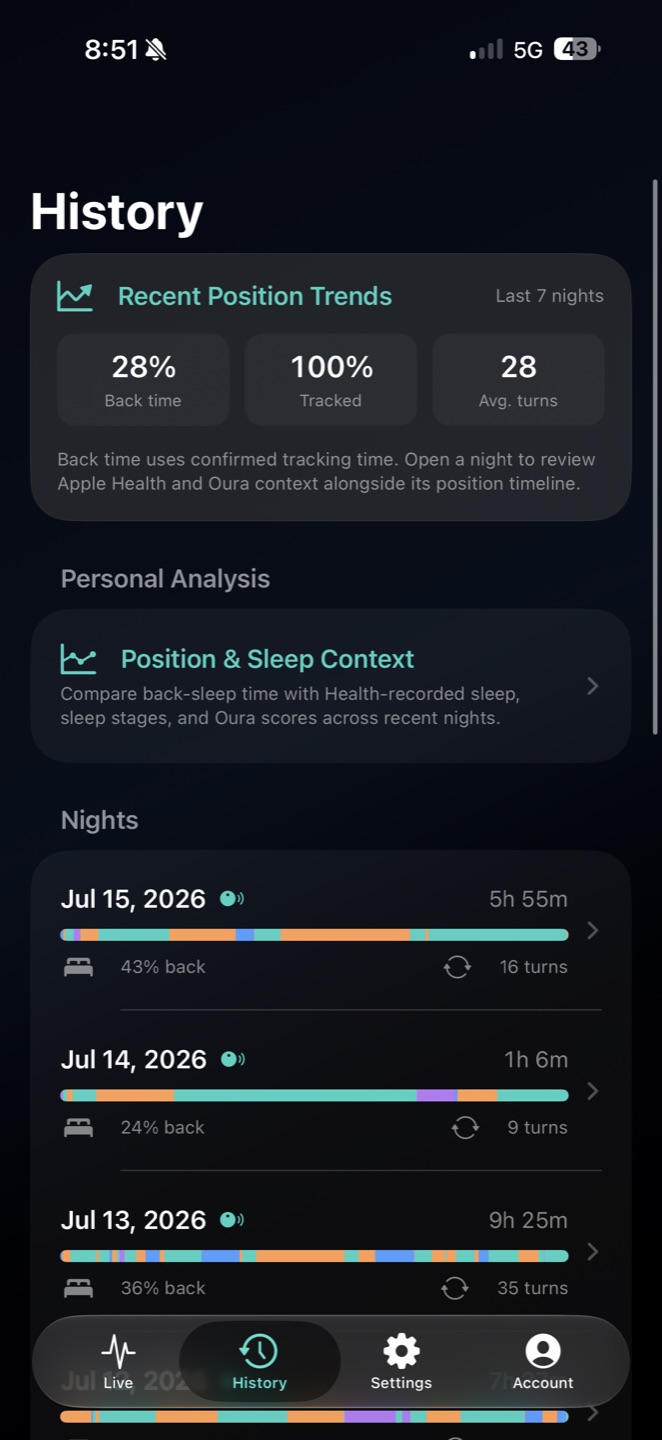
Start with a seven-night snapshot
See recent Back time, confirmed tracking coverage, and average turns before opening any individual night. This describes what was recorded—not whether a night was good or bad.
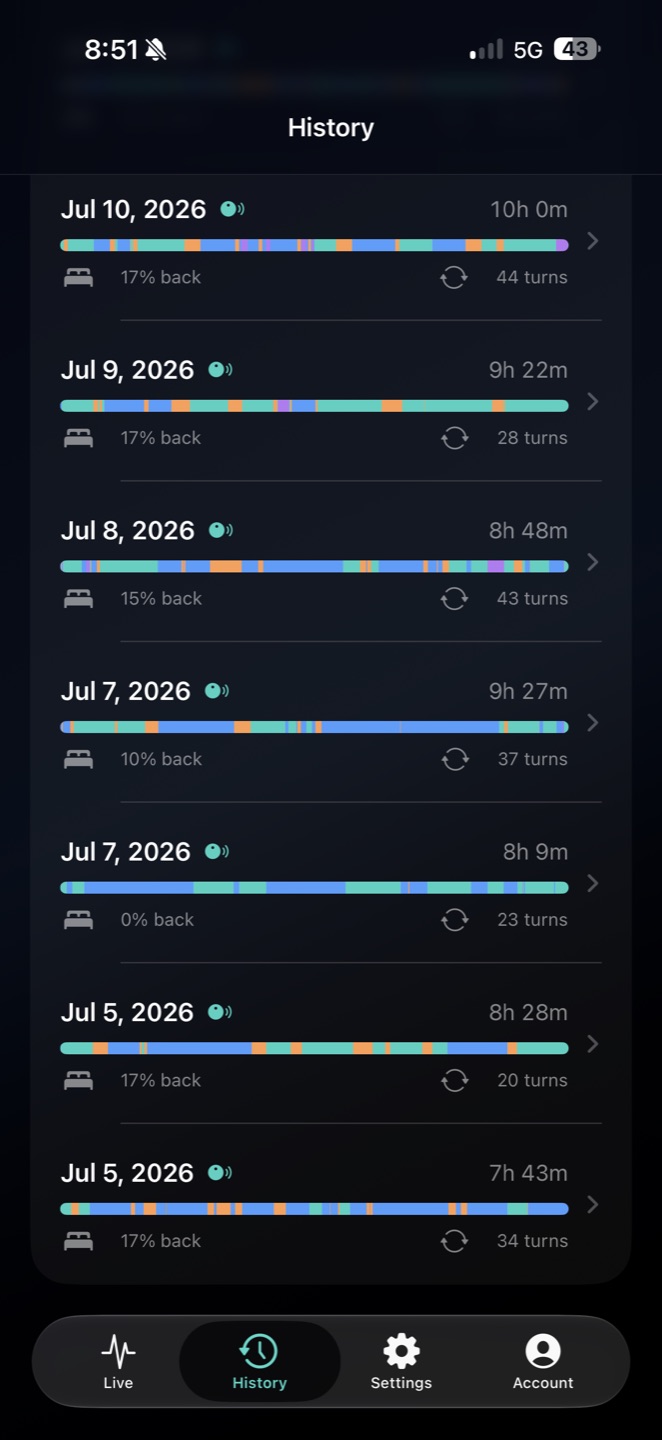
Trace a trend back to each night
Every row keeps its position timeline, session length, Back percentage, and turn count visible, so a summary can always be checked against the nights behind it.
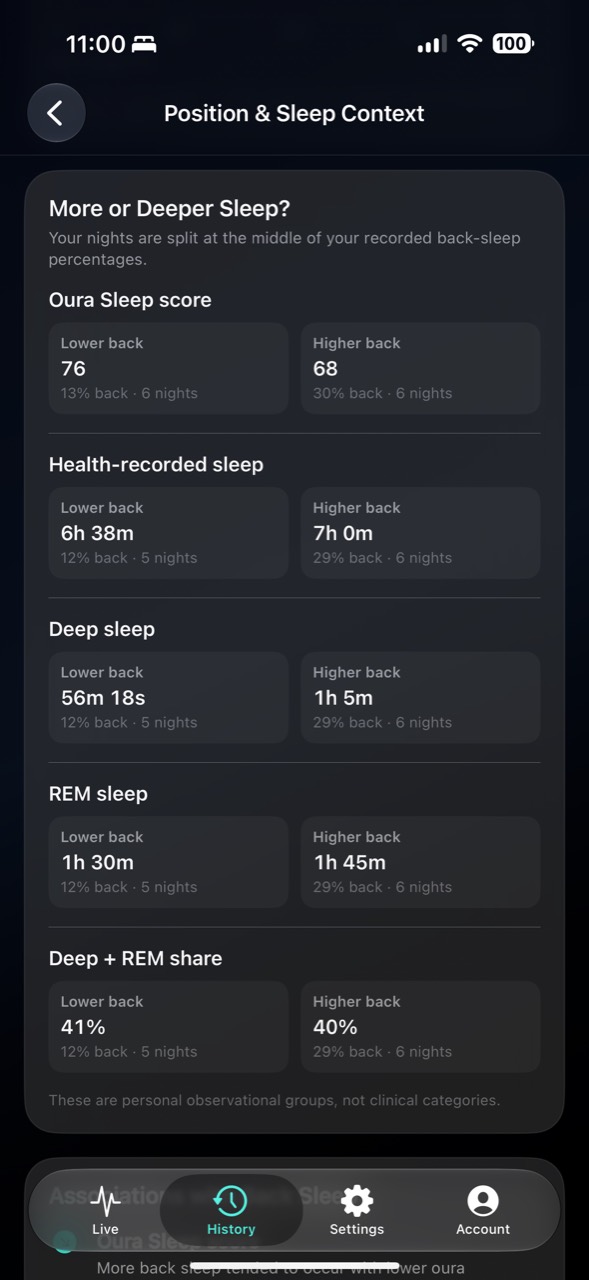
Compare sleep context carefully
With permission, NightPosture compares lower-Back and higher-Back nights with available Oura and Apple Health sleep context. These are personal observations—not proof that position caused a score or outcome.
Screens show one person’s early beta data. Your available metrics and patterns will differ.
Three simple steps
Connect and calibrate
Secure the small chest sensor in place, then save Back, Left, and Right baselines in a guided setup.
Track with the phone locked
The sensor keeps an onboard backup and can deliver configurable nudges after Back remains confirmed. NightPosture imports the session when you stop.
Review the full context
See position, tracking quality, turns, nudges grouped by Back episode, seven-night trends, and optional Apple Health or Oura context—without implying causation.
Left and right are not interchangeable for everyone.
Reflux, pregnancy, breathing patterns, cardiac conditions, pain, and individual anatomy can all change the conversation. There is no dependable rule that chooses a side from “body type” alone, so NightPosture lets you follow the side selected with your clinician or physical therapist—it does not prescribe one.
Educational content only. Not medical advice.
Your nights are personal.
NightPosture is designed local-first. Detailed position data and raw sensor data stay on your device, and raw high-frequency sensor data is never uploaded. Any Apple Health or Oura context you connect is used only for local nightly comparisons.
Small sensor. Less overnight friction.
NightPosture now works in a limited pilot with a dedicated chest-worn sensor — a coin-sized pod that tapes to a t-shirt or sits directly on the sternum. It supports one-tap reconnect, placement-aware calibration, onboard overnight recording, and local recovery. Vibration nudges fire only after your Back position remains confirmed, with strength and timing programmable in the app.
From fixed alerts to more personal insight.
Pattern-aware summaries
Compare position and tracking quality over multiple nights instead of drawing conclusions from a single session.
Sleep-metric context
Place position patterns beside permissioned Apple Health and Oura metrics while keeping each source clearly labeled.
Adaptive nudges
Our roadmap explores personalization that can learn which timing and nudge patterns are least disruptive for an individual. This capability is not available yet.
NightPosture is a personal wellness tracker. It does not diagnose, treat, or prevent any medical condition.